KUNST/STOFF
Year: 2015
Place: Tim Staatliches Textil- und Industriemuseum, Augsburg, Germany
Curator: Karl Borromäus Murr
Works:
Traduttore, traditore
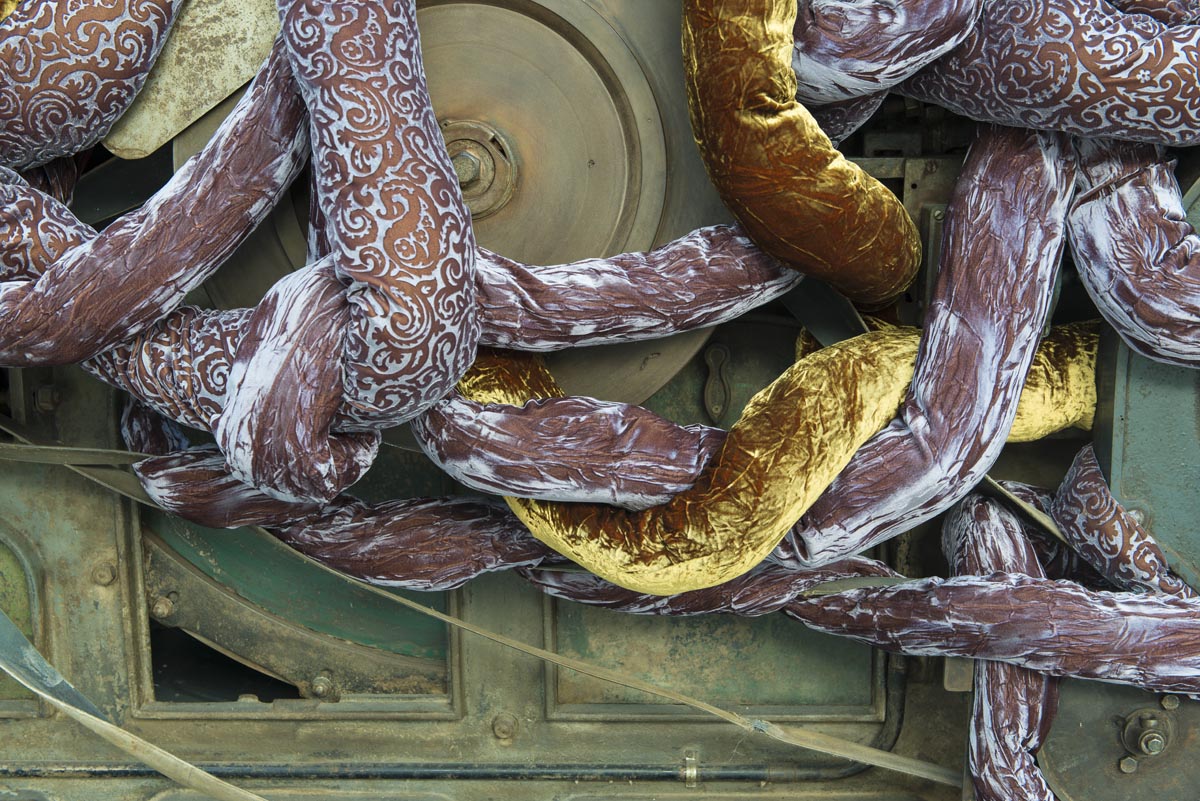
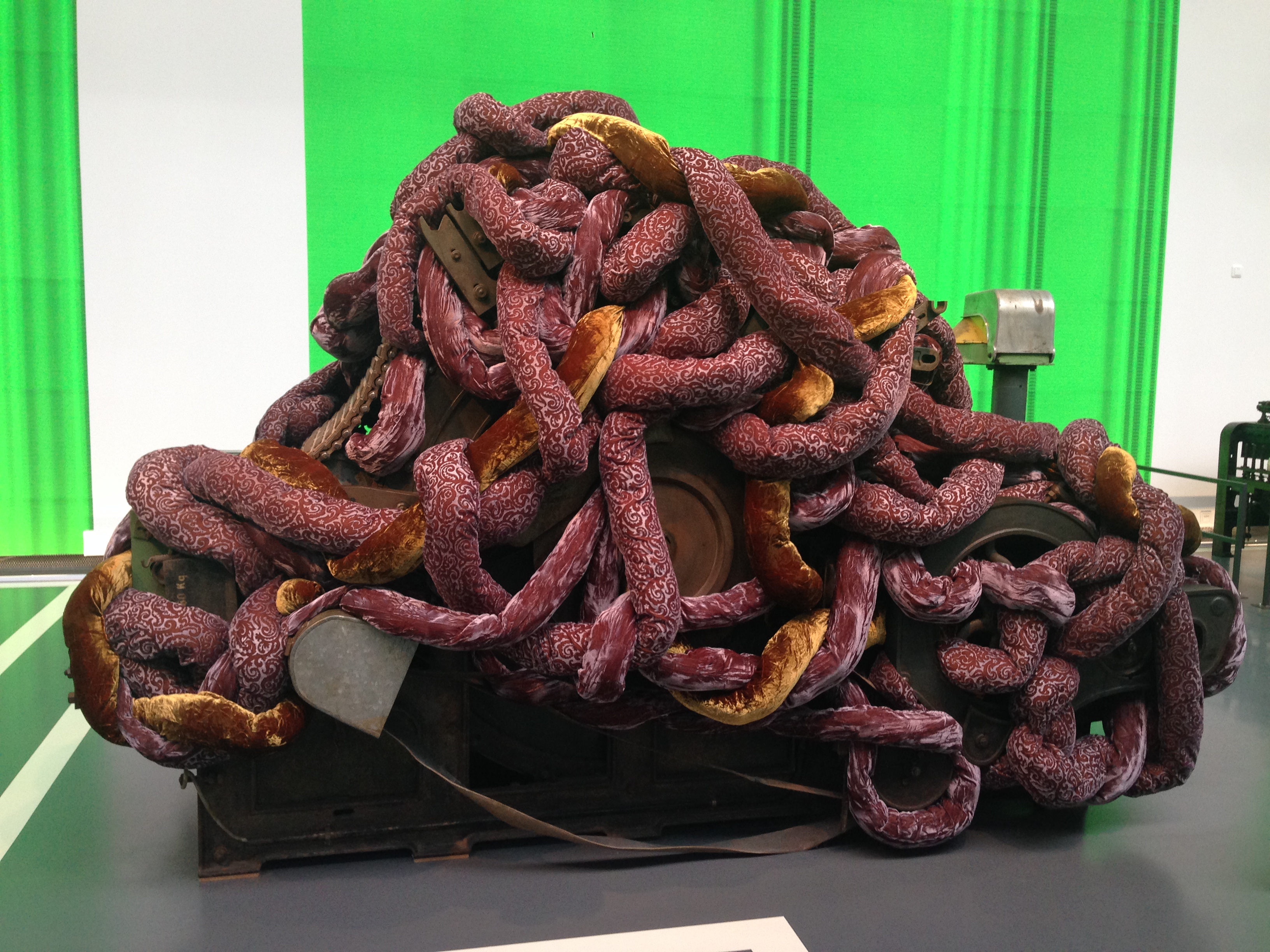
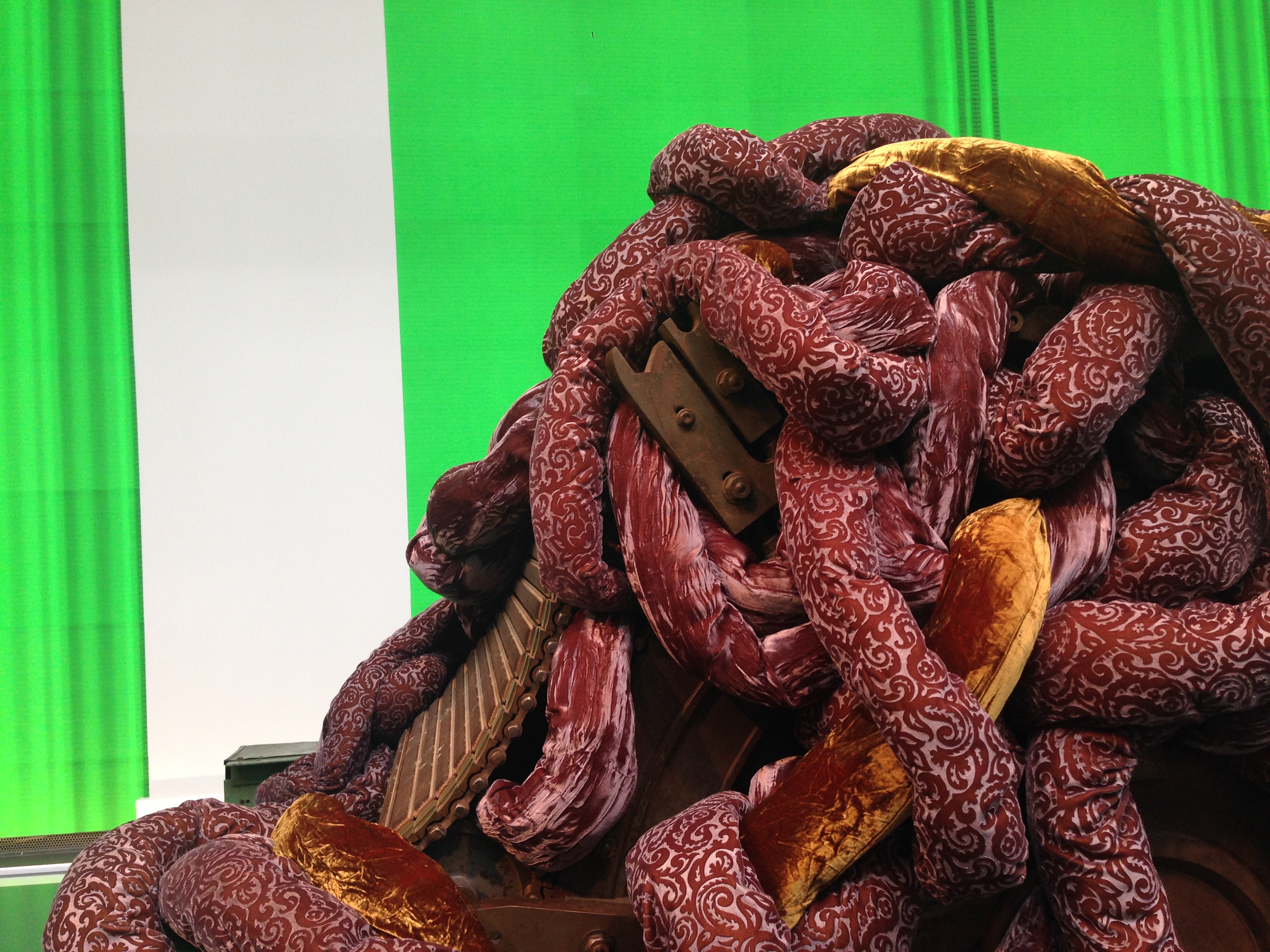
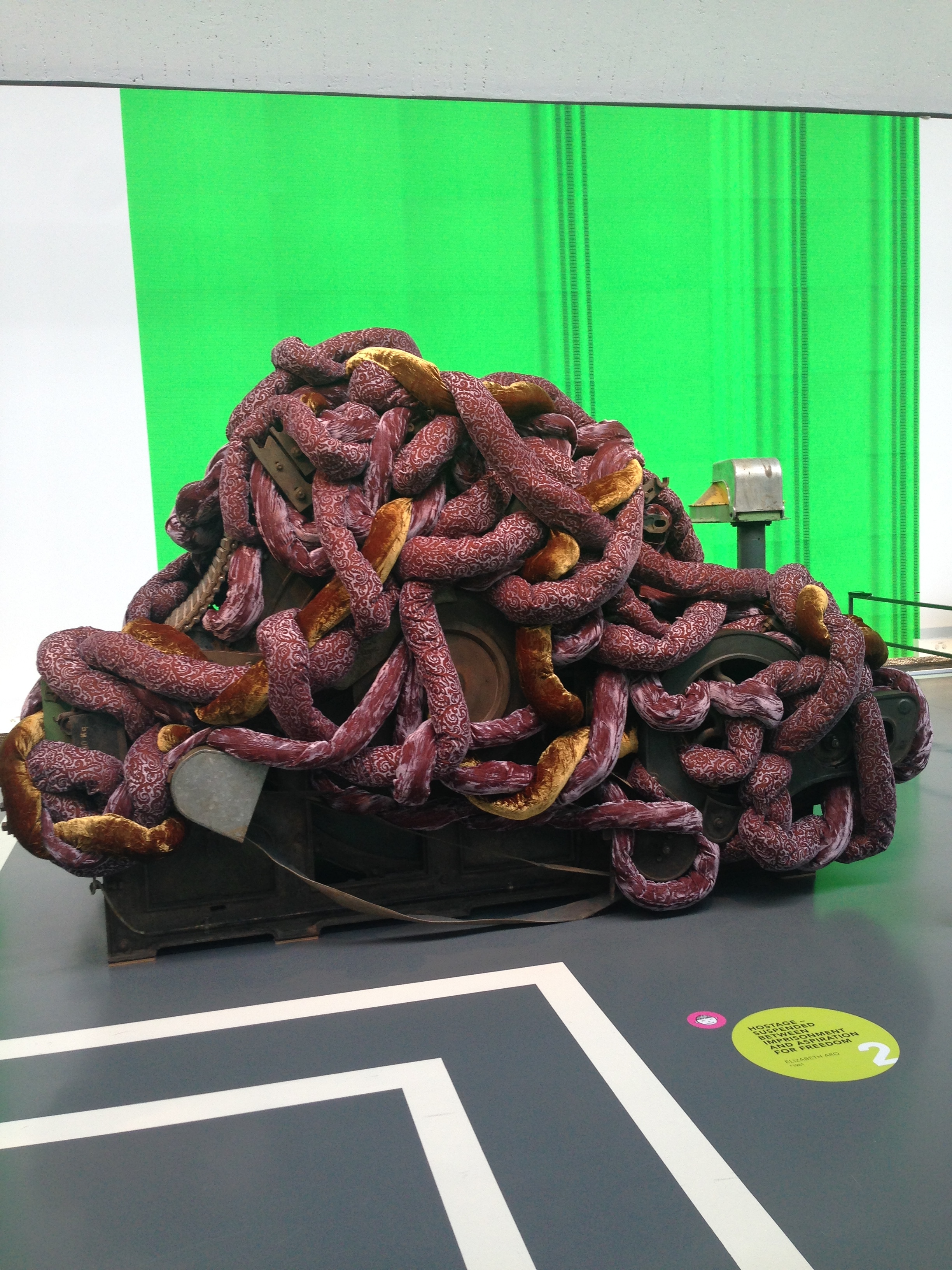
Ostaggi
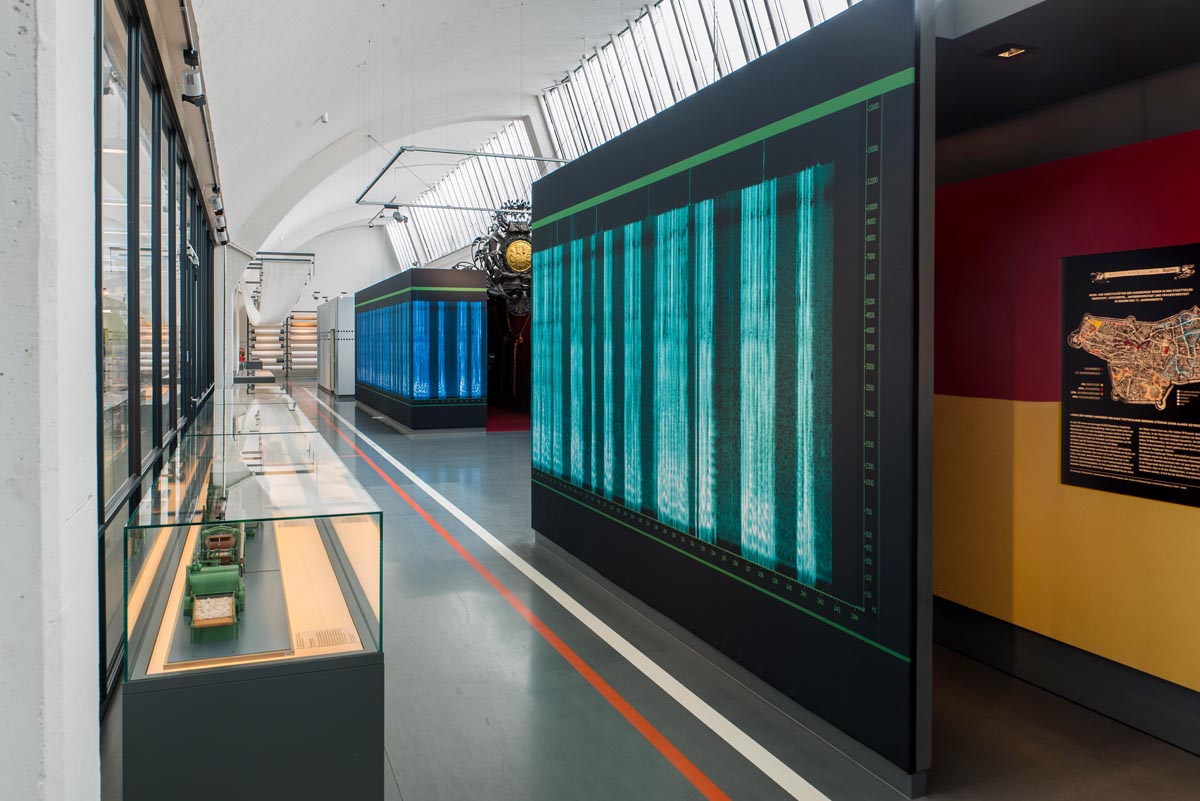
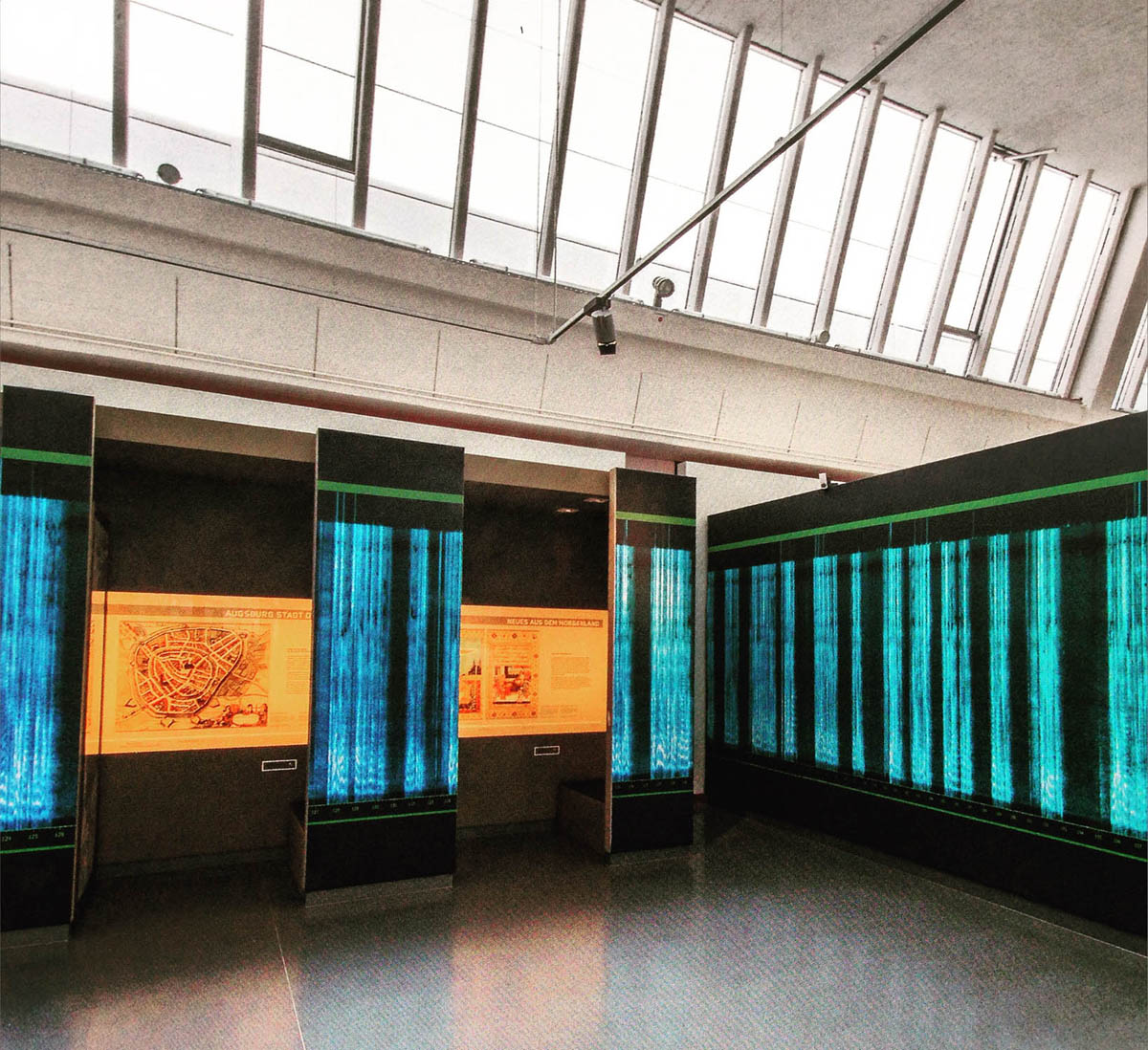
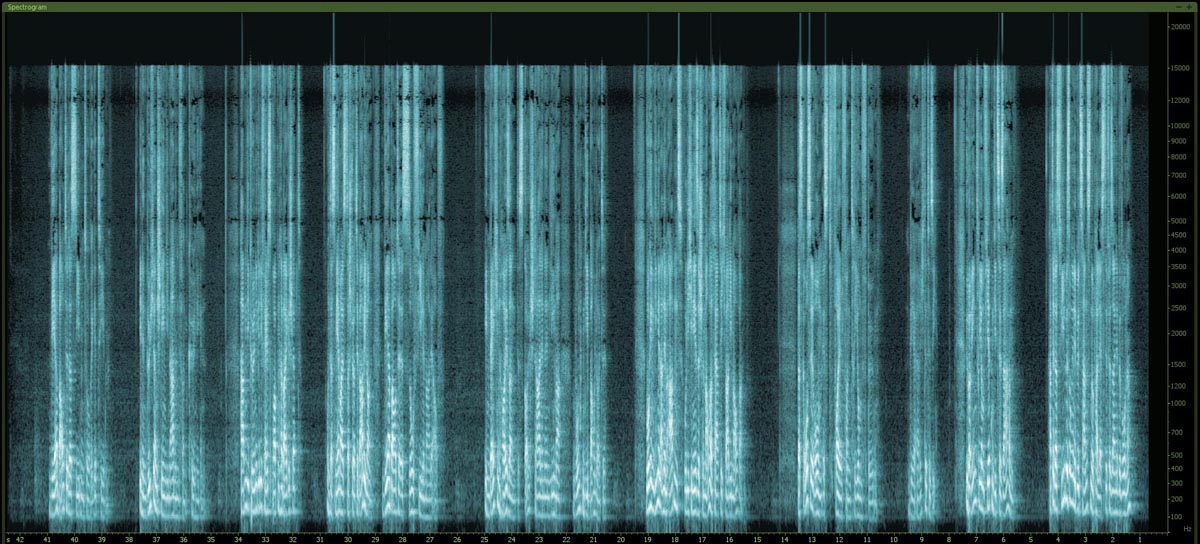
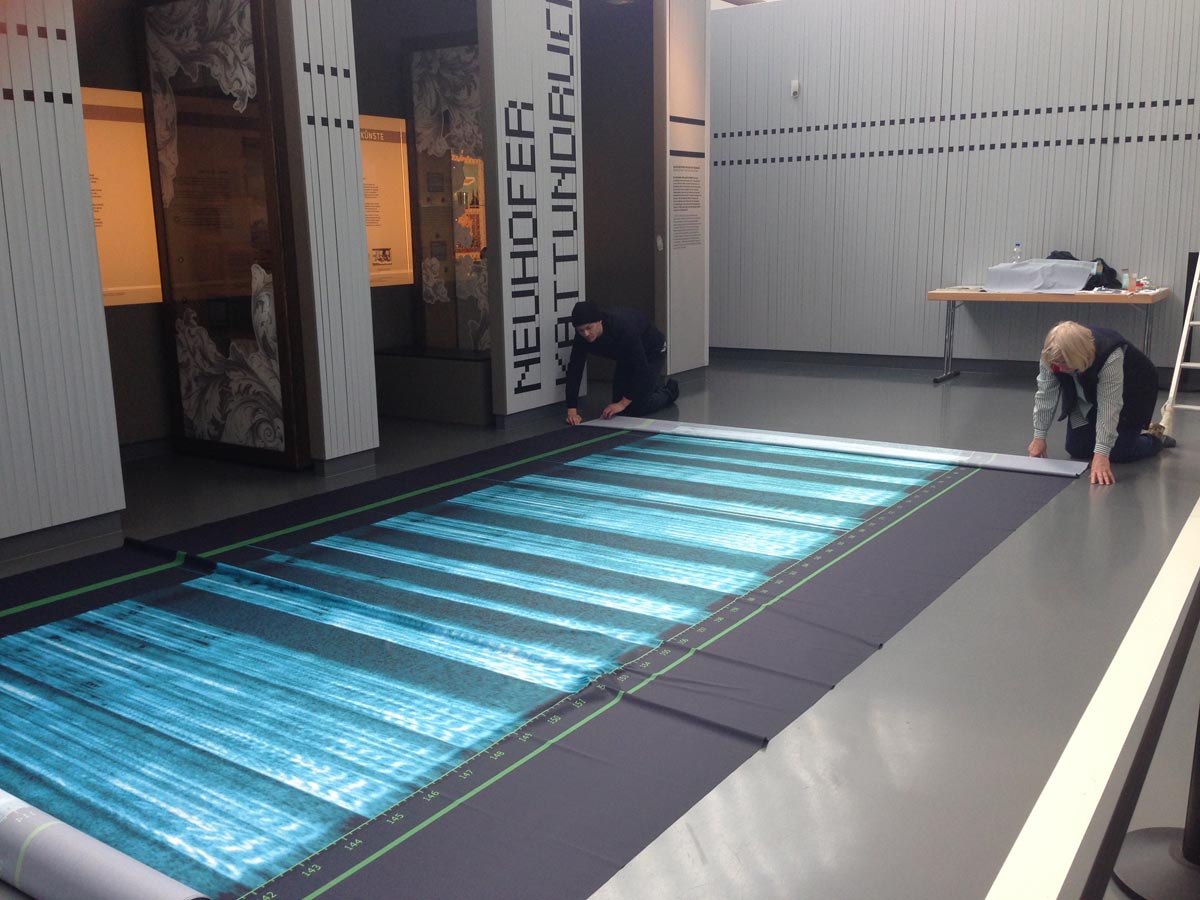
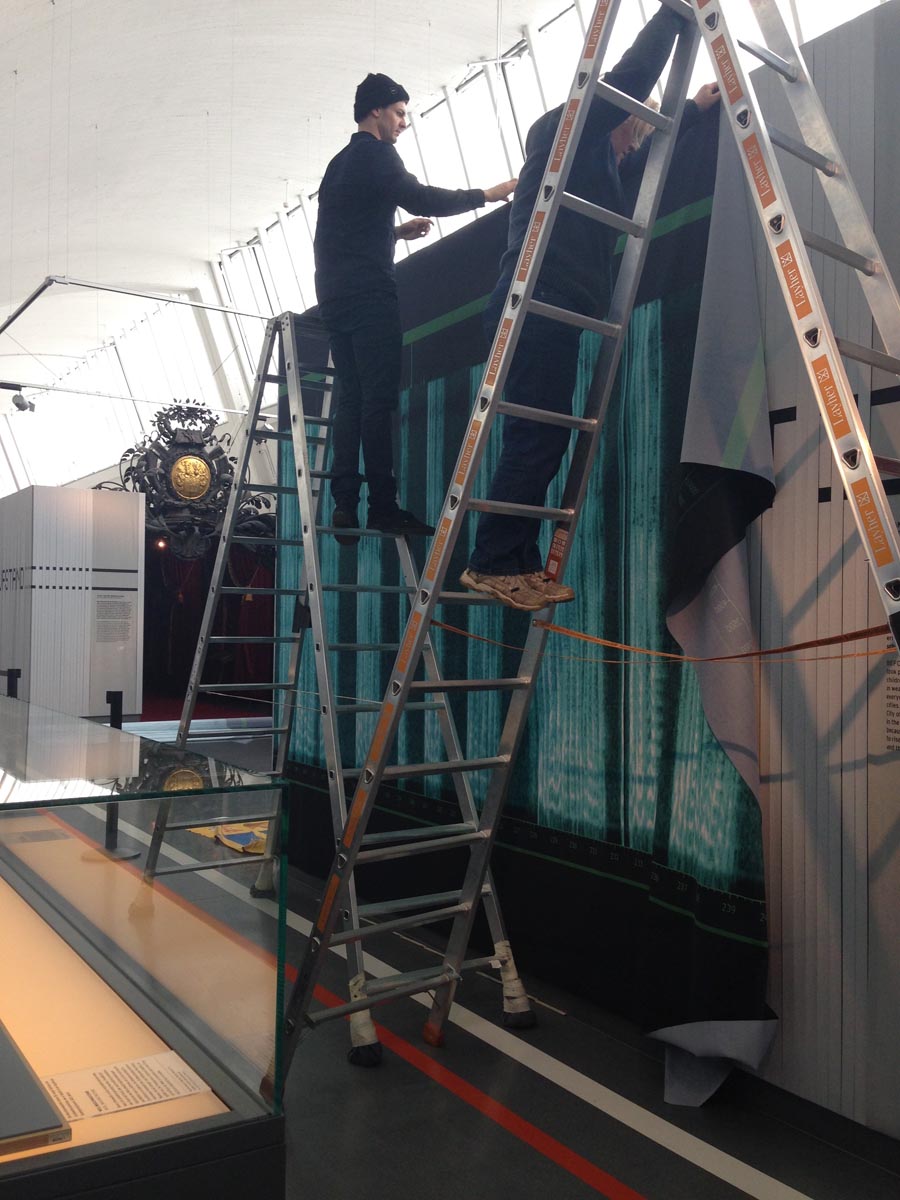
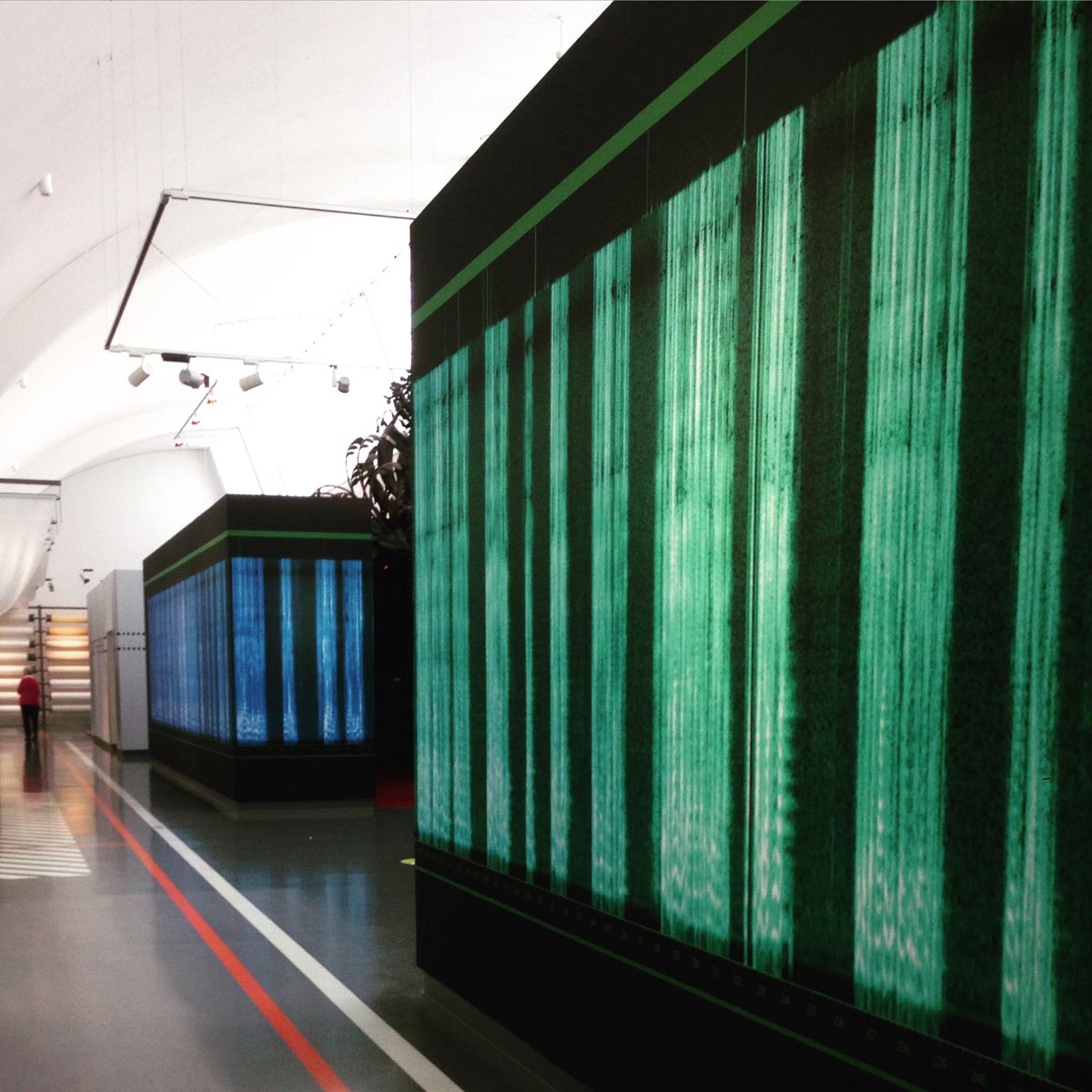
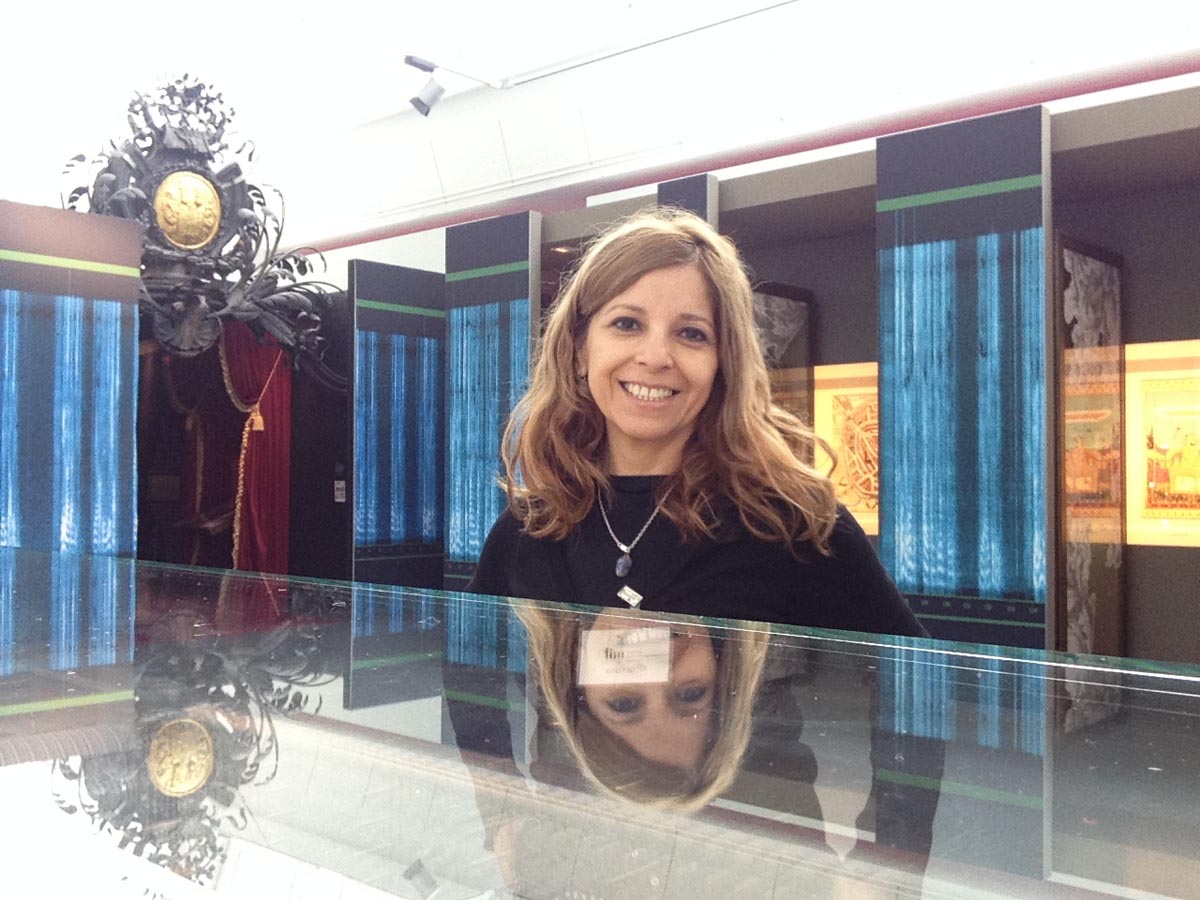
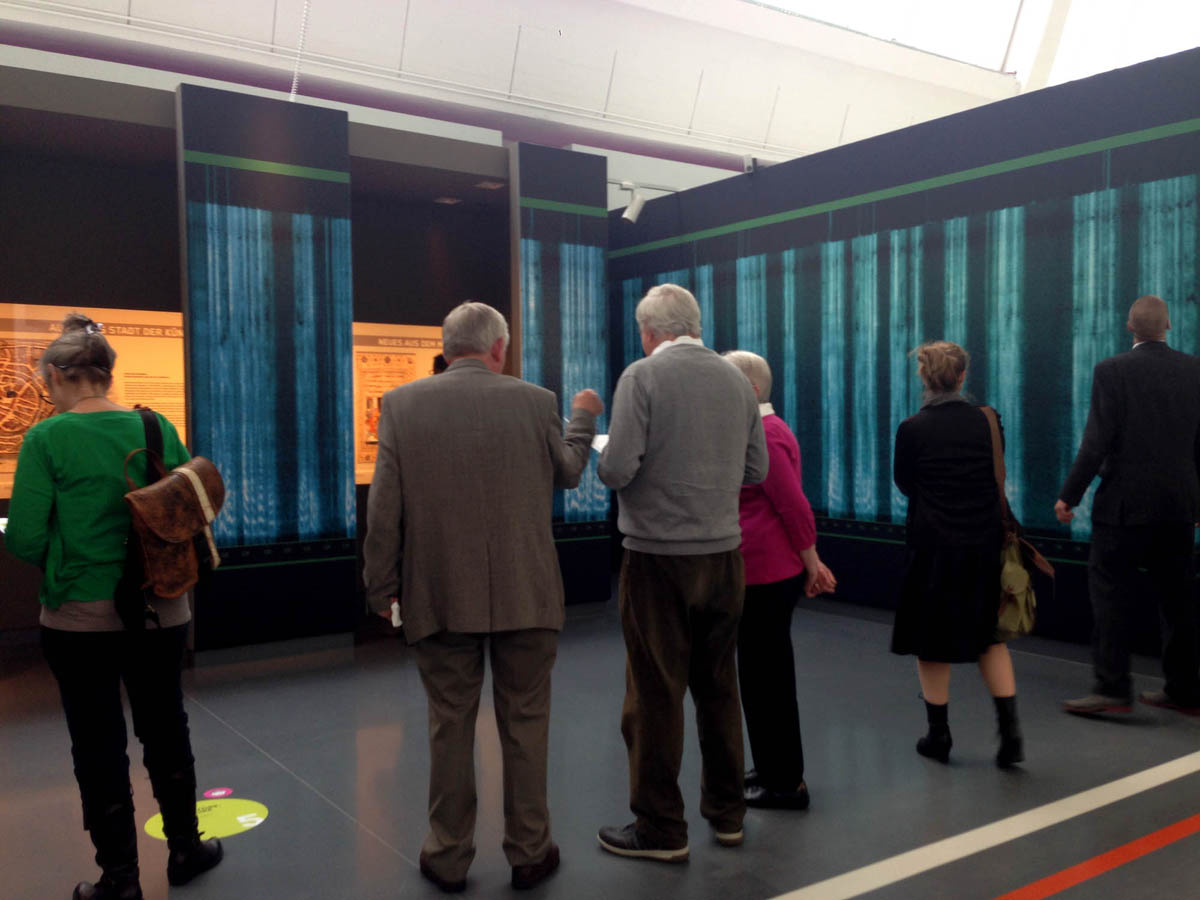
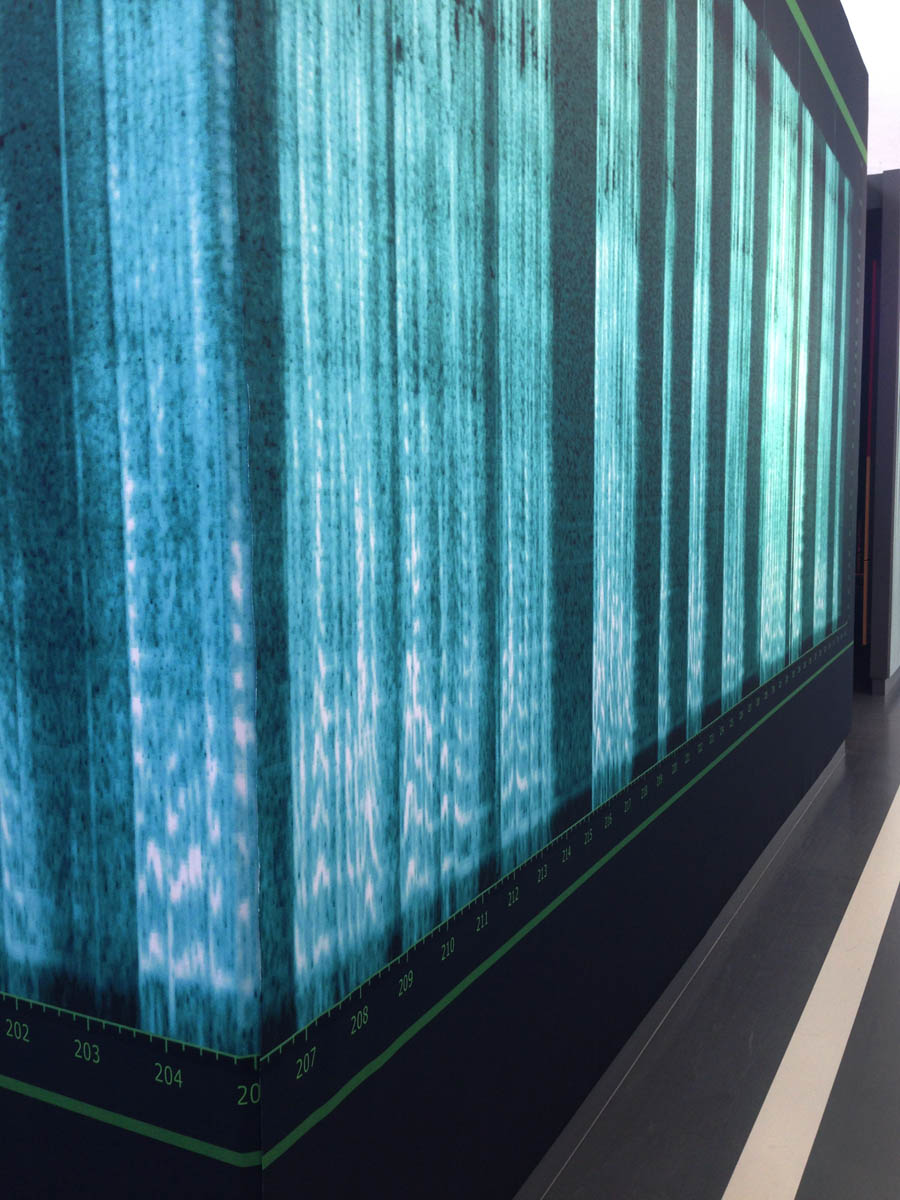
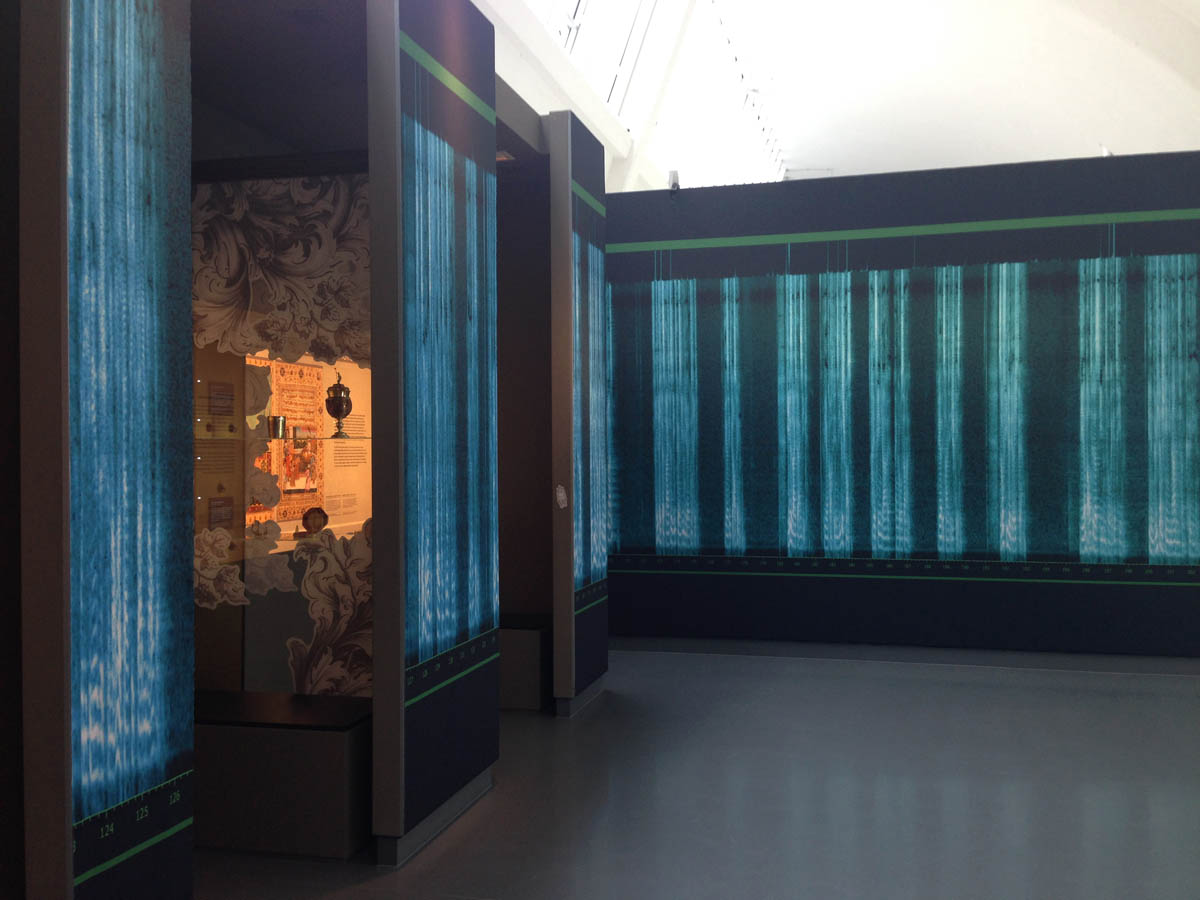
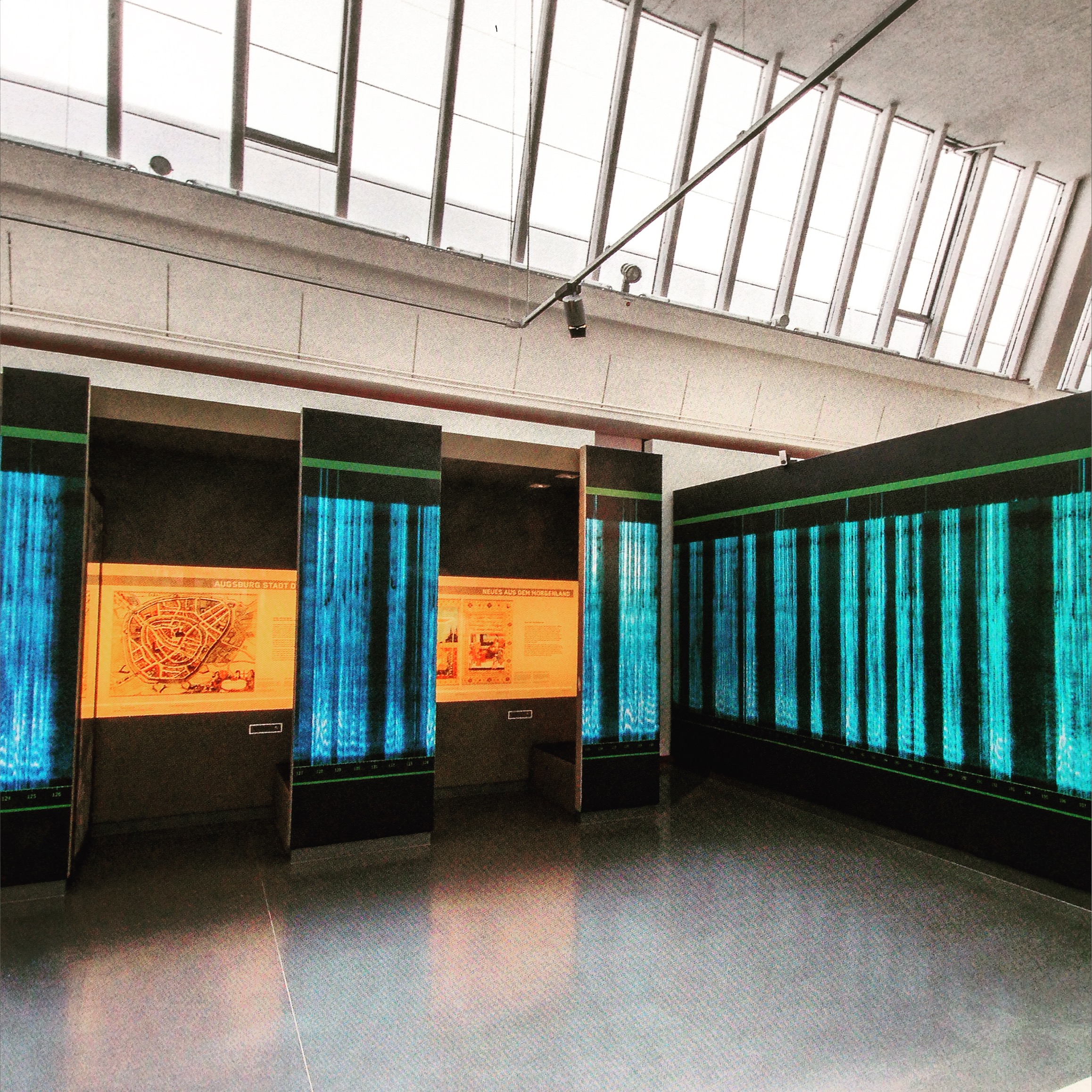
The starting point for Elizabeth Aro's artwork “Traduttore, traditore” is Bertolt Brecht's 1935 poem “Questions of a Reading Worker”. In it, the Augsburg-born poet and playwright laments the amnesia of historical tradition, which is completely silent about the contribution of the little people to the great achievements of human history. Aro first recorded this poem acoustically, then translated the recording into a graphic form with the help of an equalizer, before finally executing it as a large-scale textile print. The result is a visual poetry sui generis, a bold, cool sound image of impressive proportions. The color curtain, which measures over 30 meters, runs from a bright turquoise to a strong blue.
There is no doubt that the Brecht poem, conveyed through various translation processes, takes on a completely new meaning in Aro's work.
What fades in time in the analog speaking or listening of poetry is captured in the graphics, which record the rhythm of a voice with highs and lows, oscillating between light speech and dark silence. Despite its technoid form, the sound that has become an image still reveals its natural provenance.
Has Aro now betrayed the Brechtian original? At least that is what the title of the picture seems to suggest, which imagines a traitor in every translator. In her work “Traduttore, traditore”, the artist, who comes from Argentina and lives in Italy and is herself at home in three languages and cultures, does not ostensibly explore Brecht's “Questions of a Reading Worker”, but rather the paradoxical nature of translation itself. By distancing the result of her work so far from the lyrical original, the artist raises awareness all the more demonstratively of the translation process, which cannot help but betray its unique starting point.
The more translations of something are recorded, the more deeply this cultural technique becomes entangled in betrayal, which is diametrically opposed to fidelity to the original. For the betrayal of the translation not only affects the integrity of the original, but also that of the author and not least the translator himself, not to mention the audience.
If you still want to hear Brecht's “Questions of a Reading Worker” in the original, Aro invites you to listen to the corresponding text in three listening stations in Spanish, English and Italian translations, which the artist has recorded herself. Those who do not speak any of these languages are once again thrown back onto the phenomenon of the mediality of all transmission.
In exploring the nature of translation, Aro also touches on the core of all creative-artistic work, which in practice always draws freely on the rich store of tradition. Brecht himself has repeatedly spoken out against a stunted originality that - in a manner of speaking - would do without any reference to other works of art. In his eyes, great art lives essentially from creative adoption, from successful quotation, from the original copy.
By categorically departing from Brecht's original poem with her work, Aro also demonstrates that aesthetic creation, as much as it is indebted to tradition, is above all an original new creation in which the medium itself determines the message.
If we view Aro's work as a curtain, this insight becomes all the more plausible. For this curtain neither conceals anything, nor does it reveal anything - outside of itself.
If we return to the concrete content of Brecht's “Questions of a Reading Worker” after reflecting on the technical and medial challenges of an artistic translation, the special point of Aro's work “Traduttore, traditore” is that the original poem is borne by a single criticism: namely the criticism of a treacherous historical tradition that has made the contribution to the work “Traduttore, traditore”.